Preparing Investment Properties for Natural Disasters
Preparing Investment Properties for Natural Disasters
There are plenty of natural disaster preparation resources to help homeowners get their families and homes ready for a potential natural disaster. However, as a real estate investor, you have some unique challenges in preparing a property that you own, but don’t live in. Let’s talk about how you can keep your investment protected and prevent injuries from these natural disasters.
Protecting Tenants
As mentioned, one of the most unique aspects of disaster preparation for real estate investors is that you do not live in the property you are trying to protect. If you have rental properties, you or your property manager will need to be prepared to contact your tenants and vice versa should there be an emergency. Do your tenants have a reliable emergency contact? Is that contact prepared to respond if they get a call? Sometimes that simply means pointing them to reliable resources like the Red Cross or FEMA.
Secondly, what expectations do you have for your tenants to protect the property in the event of an emergency? Their primary focus during a weather event will be their own family and possessions, so be sure you or your property manager are prepared to act swiftly to protect the property. If you do have any expectations of your tenants, communicate them well in advance through your lease. In the next section, we will go further into how you can help your tenants prepare for specific types of weather risks. Don’t have rentals? Don’t worry, we will also cover ways to protect the physical building too.
Protecting Investment Properties
The first step in learning how to prepare for natural disasters is to become familiar with the specific types of danger your property or tenants could encounter. This danger of course differs according to each climate in the U.S. Let’s address four major weather conditions that may put your property and its inhabitants at risk.
1. Floods
Though many people think flooding may only affect them if they live on a floodplain, flash flooding can affect almost any property in the United States if enough rain falls within a short window of time or for several days in a row. Finding your Flood Zone can help you determine your general flood risk, but you may want to consider adding Flood coverage to your insurance strategy even if your property is at a lower risk for flooding. Bear in mind that coverage for Flood is always purchased separately from your property coverage, and if going through the National Flood Insurance Program, there is usually a 30-day waiting period for Flood coverage to go into effect.
Though you may be able to avoid some water damage by utilizing sandbags, being prepared to mitigate losses after a flood is very important. Here are some tips from FEMA to help you or your property manager remain safe when assessing damages after a flood:
-
Return to inspect the property only when authorities say it’s safe. Watch for downed power lines as they can electrically charge the water.
-
Wear boots and heavy gloves during clean up – snakes and other animals may be in the house.
-
Do not touch electrical equipment if it is wet or if you are standing in water. If safe to do so, turn off the electricity to prevent electric shock.
-
Only use generators or other gas-powered machinery outdoors and away from windows.
2. Hurricanes
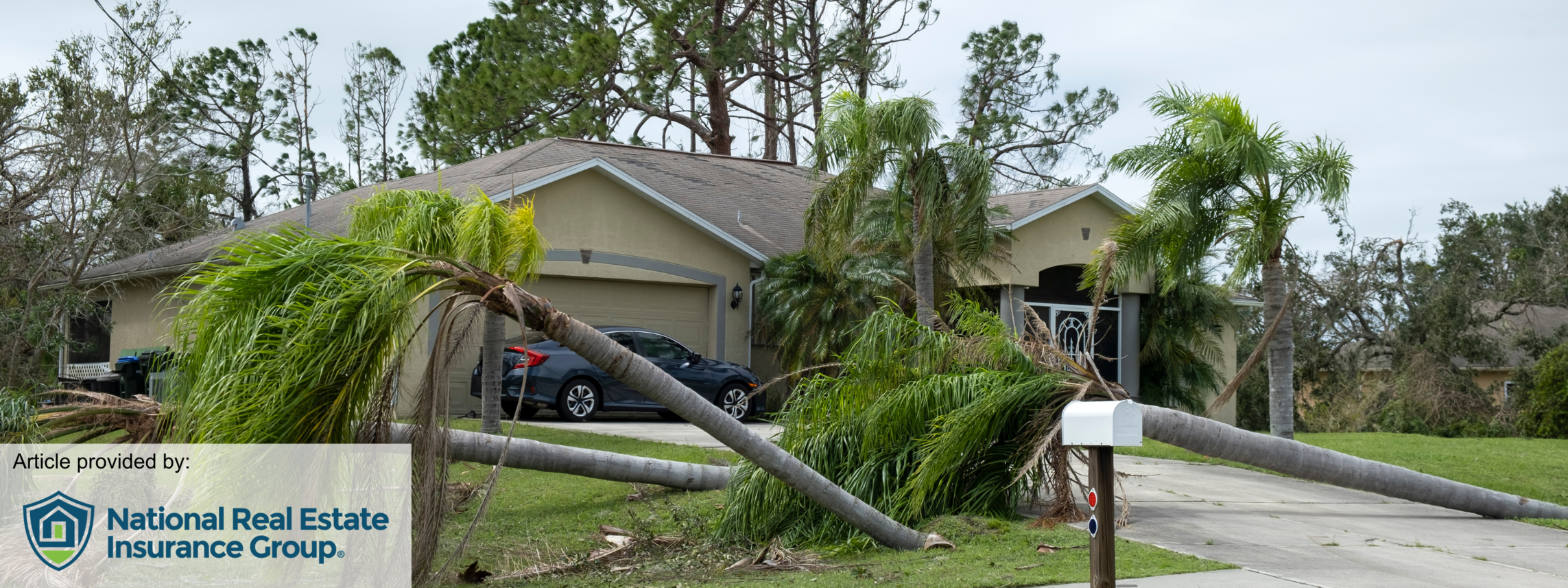
For coastal locations, tropical storms and hurricanes are the main concern when it comes to natural disasters. While you may have several days to get ready for an approaching tropical storm, it is still wise to be prepared well in advance as some supplies, like plywood for boarding windows, may sell out quickly. Double-check your insurance coverage way in advance too. Named Storm coverage is often excluded from standard property policies and must be purchased separately. In addition to having board-up materials on hand and the proper insurance, you will also want to:
-
Make sure all trees and shrubs are well-trimmed to make them more wind-resistant.
-
Secure any loose gutters or downspouts and clear any clogged areas to prevent water damage.
-
Be sure the battery backup for your sump pump is in good working order to prevent drain backups.
-
Purchase a portable generator for use during power outages. NEVER try to power the house wiring by plugging a generator into a wall outlet.
3. Wildfires
Those of you investing in California or any other western states have already had a few challenging years when it comes to wildfire. The best thing you can do to protect your investment against a wildfire is to create “defensible space.” This includes activities such as:
-
Frequently clearing dead vegetation, dried leaves, pine needles, and ground debris from around the home
-
Removing all tree limbs within 10 feet of the chimney, or that overhang the roof
-
Creating fuel breaks with driveways, walkways/paths, patios, and decks.
-
Creating at least 12 feet of space between canopy tops for trees 30 to 60 feet from the home.
-
Make sure entry points into the home are guarded, for example, vents should be covered with mesh screen
Though tenants may have some responsibilities regarding lawn maintenance, no one will be more concerned about protecting your investment property from wildfire than you. Therefore, make sure you or your property manager have a detailed plan for the upkeep of your defensible space. To keep tenants safe, emphasize the importance of following any evacuation orders from local authorities. Fire moves fast, so it is best to simply get out!
4. Tornadoes
Tornadoes most often occur in the spring and summer months but can strike in any season and at all hours of the day. There are of course some areas of the country that are more prone to tornadoes, namely the Midwestern and Southeastern states. Though your property may be built to code, that doesn’t mean it can withstand winds from these extreme wind events. For this reason, building a “safe room” to FEMA or ICC 500 standards can provide a space where your tenants can seek refuge during a tornadic event. Good places for safe rooms are:
-
The basement.
-
Atop a concrete slab-on-grade foundation or garage floor.
-
In an interior room on the first floor.
In addition to having a “safe room”, keeping up on tree maintenance, like trimming dead limbs or removing a dead tree, can keep flying debris from damaging the main structure. You should also instruct tenants to bring any outdoor furniture, deck, or yard decorations inside if severe weather is in the forecast.
Protecting Yourself
Reviewing Your Insurance Coverage
Don’t wait until severe weather is headed your way (or after a storm!) to become familiar with your insurance coverage. As mentioned earlier, there are certain coverages that aren’t typically included in standard property policies, such as Named Storm coverage and Flood coverage. As you can imagine, discovering that you do not have coverage for the devastating losses natural disasters can bring can exponentially increase the hardship, if not take you out of business altogether.
It is also important to know your responsibilities as an insured. Though it may be challenging to gather all the details at first, reporting losses as timely as possible can help expedite the claims process.
Everyday Preparedness
Whether or not you invest in an area prone to natural disasters, you should be practicing everyday preparedness. More minor emergencies like a water heater replacement may be unavoidable, and items like carpet may need to be replaced due to wear and tear, but there are many losses that can be avoided through routine maintenance. Also, don’t just assume your property manager has every base covered; make sure you are aware of the specific services they perform. They should also communicate regularly with you about any inspections or repairs they perform.
Of course, one of the best ways to safeguard your rental properties is to place the best tenants possible. However, even good tenants can benefit from a reminder or two about living safely in their homes. For example, cooking fires are one of the deadliest, yet preventable accidents. Safe living practices such as attentive cooking, proper use of space heaters, and proper training on the use of smoke detectors and fire extinguishers can help reduce the risk of unnecessary damage to your investment and prevent severe injuries or even save a life.